Christopher Nolan is Done Thinking About the Roman Empire: “The Odyssey” Review
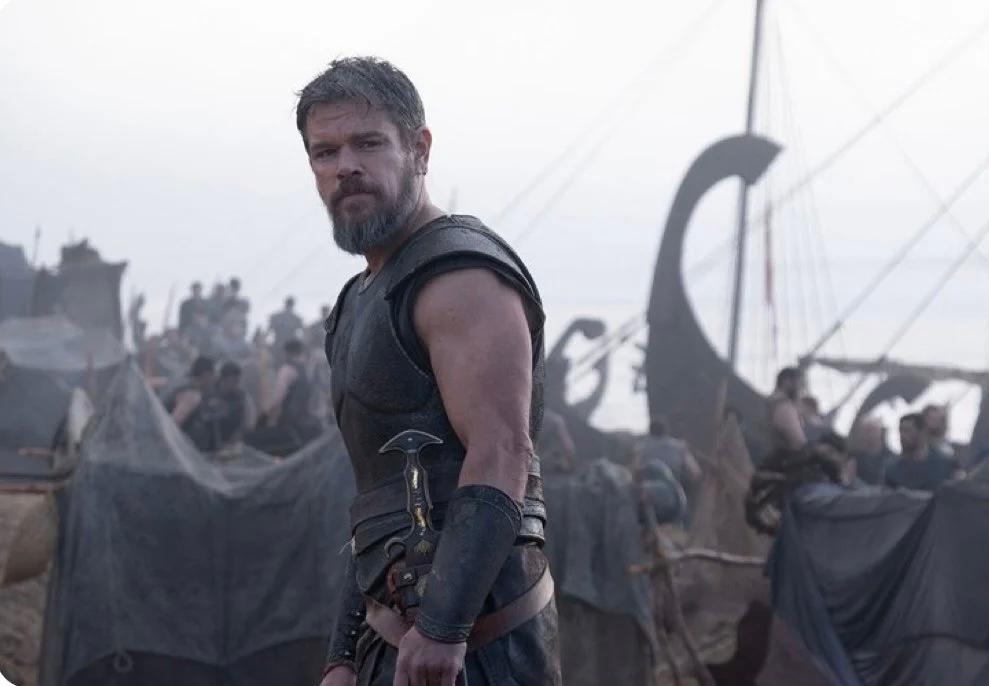
Before you @ me, yes, I know Homer’s Odyssey is about ancient Greeks, not Romans. But considering the hyper-masculenity epitomized by Trojan soldiers, it’s worth considering the shock women felt when we realized how much time men spend thinking about this particular era. On the surface, Christopher Nolan’s The Odyssey feels like more of the same: an iconic male saga about a celebrated warrior who travels the world conquering magical beasts. But underneath the sword and sandal action and grandeur lies a nuanced condemnation of toxic masculinity and the folly in celebrating physical strength as mankind’s greatest achievement.
Centuries after it was written, we’re all more or less familiar with Homer’s epic poem. Perhaps we were assigned the text in high school or have seen parodies rippling through modern pop culture. Nolan’s version is a more or less straightforward adaptation, streamlined to clarify his tone and intent. Matt Damon stars as the titular traveler, leading the all-star cast with a surprisingly contemplative performance that resists falling into archetype. Majestic set pieces bring the fantastical story to life while modern language makes the plot accessible without losing any of the epic flare.
We begin in Ithaca as Queen Penelope (Anne Hathaway) anxiously awaits the return of her king. To keep the piece, she has agreed to entertain hordes of boorish suitors hoping to claim the kingdom by winning her hand in marriage. Heir to the throne, Telemachus (Tom Holland) grows tired of these visitors and longs for the father he never knew. Meanwhile, on a distant beach, Odysseus (Damon) spends his days absently searching for pieces of his decimated ship. Fed lotus flowers by the nymph Calypso (Charlize Theron), he has forgotten his past relationships and abandoned all hope of returning home. As the battle-worn soldier slowly recovers his memories, Nolan follows the course of his meandering journey home after fighting for Agamemnon (Benny Safdie) in the Trojan War. Spectacular battles bookend the film following transportation of the legendary horse Odysseus and his men use to infiltrate the city.
Nolan takes a grounded approach to this magical story, working through the realities of each epic trial. The Cyclops Polyphemus (Bill Irwin) is not a fearsome brute, but a towering old man with a hideously twisted face. Circe (Samantha Morton) is similarly relatable. While she does transform Odysseus’ men into pigs, painstakingly molding their bodies in an excruciating metamorphosis that brings to mind John Landis’ An American Werewolf in London, her justification for this spell hints at past trauma from barbaric men similar to those who have just invaded her home.
The cannibalistic Laestrygonians may decimate Oddysseus’ crew, but they are simply defending their shores. The infamous Sirens are not murderous seductresses but reminders of the life Odysseus left behind when he reluctantly agreed to go to war. Even dead soldiers arising from Hades have legitimate hatred for their leader and Calypso is not really holding him prisoner, but giving him shelter while he works through massive guilt. Nolan effectively amplifies the horror of each mythical creature — including a nerve-shattering thunderstorm sent from Zeus. But we do not celebrate Odysseus conquering these trials. Instead we watch as each narrow escape chips away at his confidence, leaving a grief-stricken old man in the warrior’s place.
Despite widespread acclaim, Nolan has faced criticism for producing overtly masculine narratives with thinly drawn female characters. While The Odyssey does overflow with men, it narrowly passes the Bechdel test. In fact, Nolan goes out of his way to present the horrors of a woman’s life in a world completely controlled by men. Lupita Nyong’o makes the most of her tiny dual roles as Helen of Troy and Clytemnestra, leaning into rage against male destruction and the carnage unleashed in her name. Hathaway breaks our hearts as the long-suffering Queen desperately trying to hold onto peace. For years she has been placating this group of despicable suitors while thanklessly ruling Ithaca in her husband’s place. Nolan excises a moment of ancient misogyny while reminding us that women are not responsible for violence committed by their men.
But what makes the Odyssey an ultimately feminist film is Nolan’s depiction of Odyseus himself. Rather than a celebration of hyper-masculenity, Damon’s version of the legendary warrior is a fragile man haunted by loss and pain. Hopelessly unmoored, he must ultimately give up control if he hopes to reclaim the life he left behind. His Odyssey is less a grand adventure and more a desperate search for redemption. Breathtaking battle sequences chronicle the violent Trojan War as Odysseus must reckon with his complicity in a campaign driven by little more than vanity. As the mythical Athena, Zendaya serves as a poignant reminder of the true cost of this virile folly. Rather than simply regurgitating a well-known story, Nolan interrogates our reverence for hyper-masculine symbols of violent domination while exposing the true cost of war.
Jenn Adams is a writer and podcaster from Nashville, TN. Find her on social media @jennferatu.